Not every component gets the spotlight—but they still deserve a standing ovation (or at least a well-designed pouch). From winter tokens to oversized event cards and surprisingly expressive blindfolds, this post is all about the small but mighty pieces that keep the game running smoothly… and stylishly.
Winter Tokens
Throughout the game, players gain or lose points using small snowflake-shaped tokens called Winter Tokens. These are stored directly in the designated slots on each personal player board. When a player “melts” their snowflakes—representing the passage of winter—they remove the tokens and return them to their pouch.
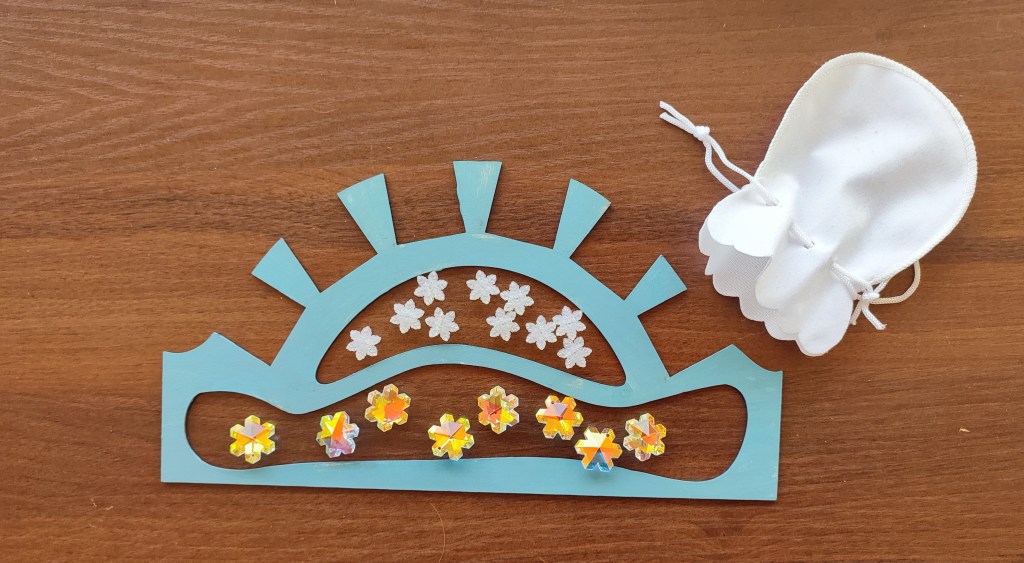
To find the perfect match, I tested several types of snowflake tokens. I wanted to evaluate not only their size and ease of handling, but also how easily they could be recovered if accidentally dropped. For blind players, there is no meaningful difference between something being five centimeters or a full meter away. If your hand is not on it, it’s lost. So it was crucial to avoid round tokens that might roll or scatter out of reach.
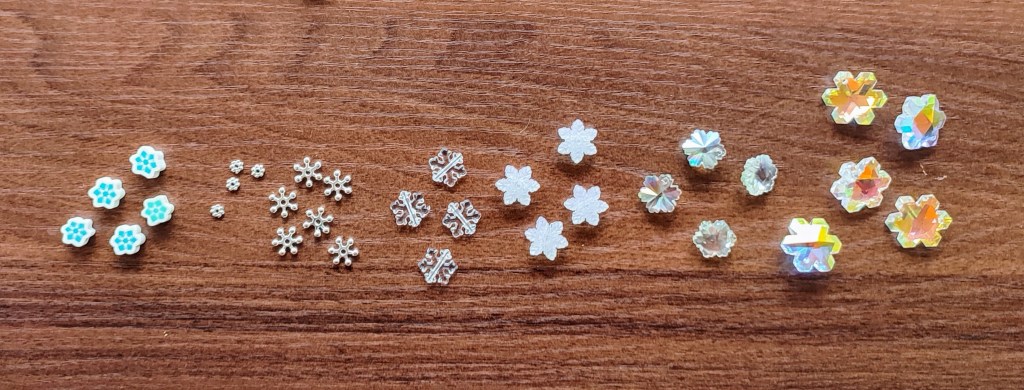
In the end, I chose two distinct kinds of tokens: one representing a single point, the other five points. They are similar enough in appearance to feel like a coherent set, but different enough in shape and weight that they’re instantly distinguishable by touch. This tactile clarity is essential for ease of play.

Pouches
Each player has a pouch to hold their winter tokens. At the beginning of the game, the pouch is emptied, and as the game progresses, tokens are placed back into it. The pouches don’t need to fit an entire hand, but it must be easy to reach in and remove everything with one hand when needed.
I initially used rectangular pouches, but the tokens tended to get stuck in the corners, especially the smaller ones. Switching to rounded pouches solved this issue: with no corners, nothing gets trapped, and it’s easy to empty them completely.
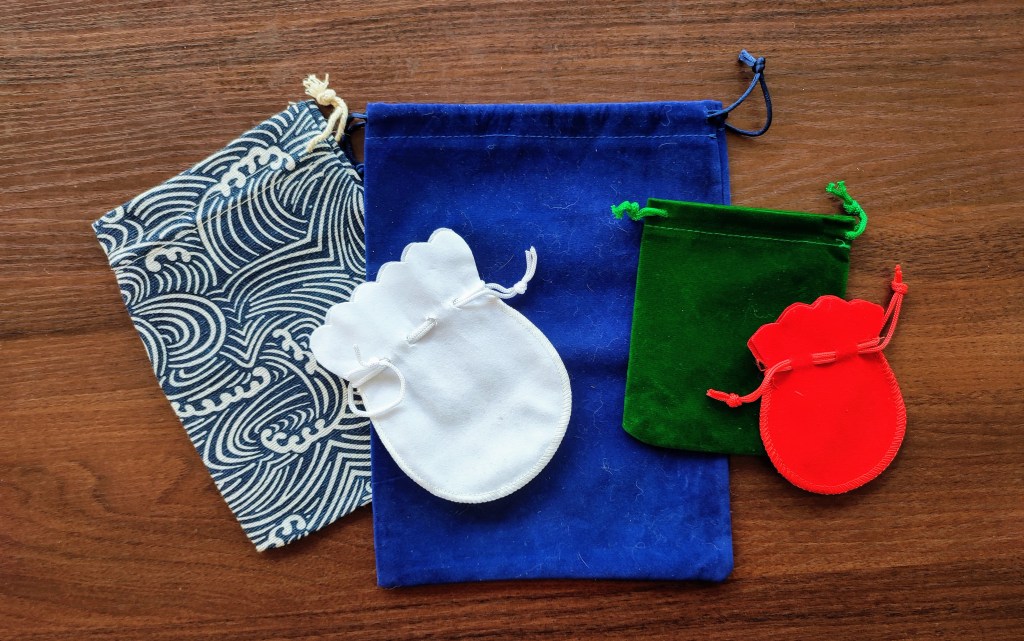
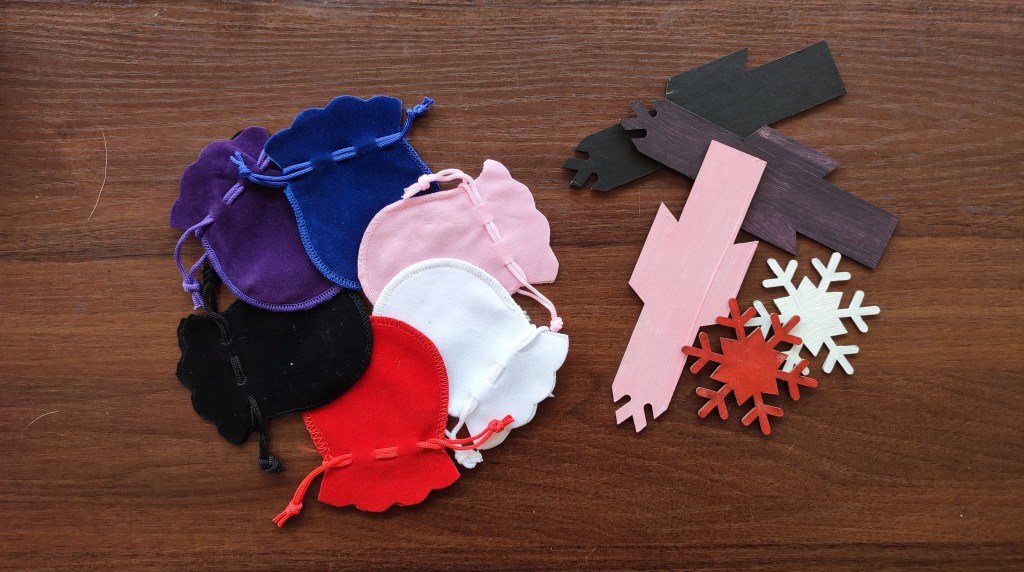
Each player has their own color-coded pouch and matching components. While this visual cue is not relevant to blind players, it adds an aesthetic touch and may still assist partially sighted players during setup.
Event Cards
In many games, event cards feature some thematic flavour text and a brief description of gameplay effects—usually all fitting on a standard poker-sized card. For this game, however, adding Braille meant a complete redesign.
I opted for nearly A5-sized cards, giving enough space to fit both the Braille and the tactile symbols. Even then, I had to rewrite some of the text multiple times to make it fit while staying clear and meaningful. I chose to use uncontracted (Grade 1) English Braille, since not all players are familiar with the contracted form.
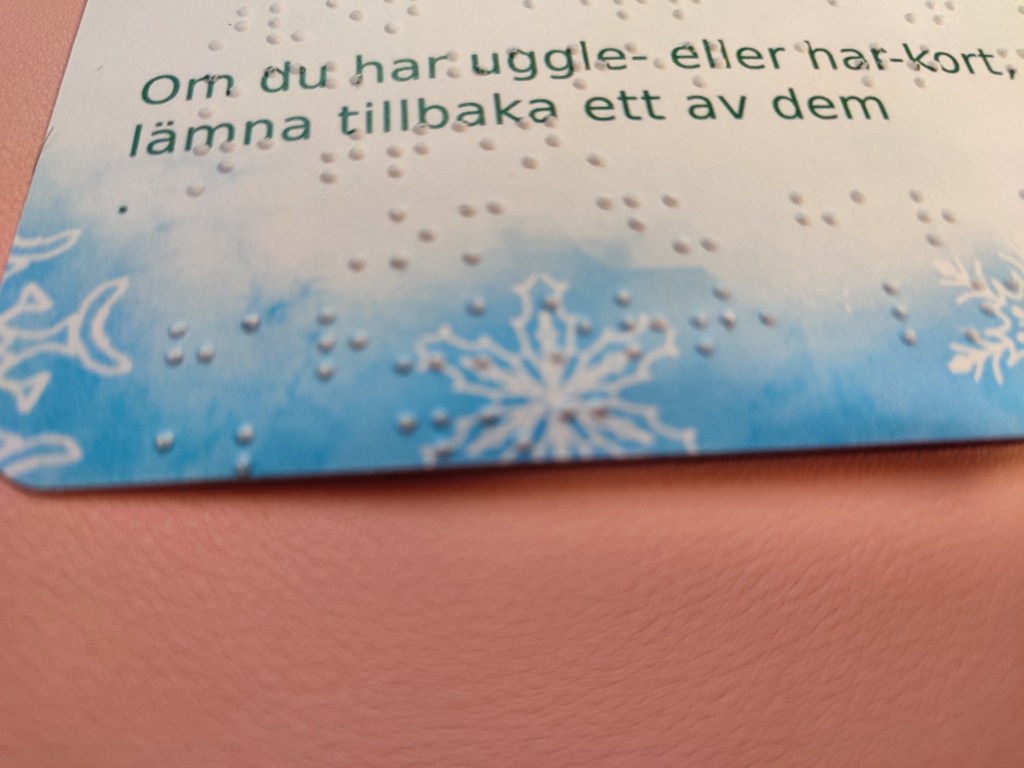
In my haste with the paper cutter, I managed to snip off just three tiny dots from the Braille text. That’s all it took to transform the Swedish words “av dem” into the cryptic “ab dec.” I do not (yet) speak Swedish, but even I raised an eyebrow when b and c showed up so close together in a germanic language.
The Rulebooks
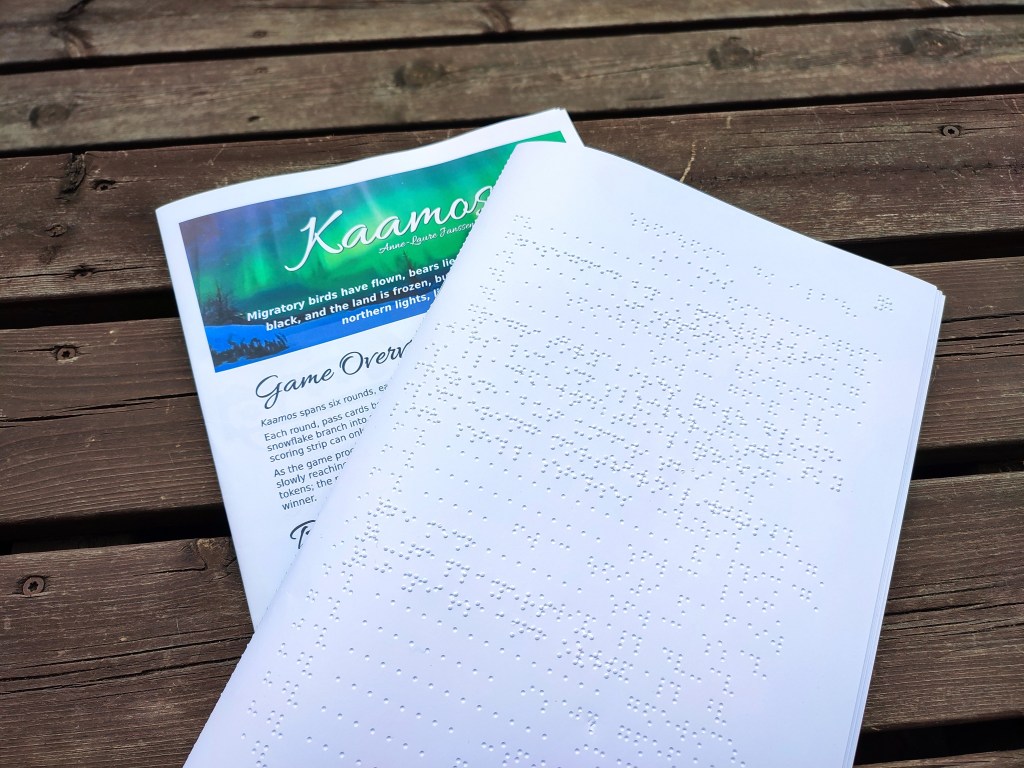
Creating the rulebook was another major challenge. I am used to designing visual rules, where one image can explain almost everything. But with Braille, there’s no quick visual aid—and raised images often add more confusion than clarity, especially if you don’t already know what you are “looking” at.
So the Braille rulebook had to describe everything in detail. It turned out quite thick, as I included not only the gameplay mechanics, but also descriptions of each illustration. Blind players may know what a fox or owl is, but not what the specific game token looks like. Descriptions like ”The fox is facing to the left,” ”The hare is sitting,” ”The owl is shown with wings spread” help evoke a mental image even when the shape isn’t instantly recognizable, especially for people blind from birth.
There is so much I could say about the creation of those shapes, I might dedicate a fourth part of this blog to that alone.
Eye Shades
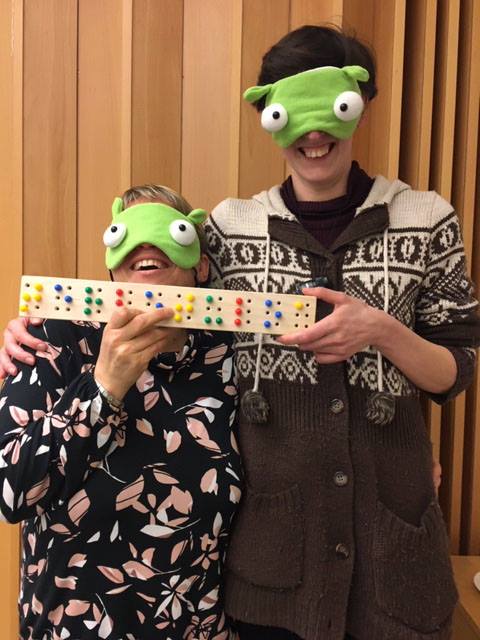
Lastly, I included one optional accessory: eye shades. For sighted players curious (or brave) enough to try the game without vision, playing blindfolded gives a better sense of the experience.

Also, funny eye shades have turned out to be an unexpected secret weapon. My booth a fairs is often filled with tactile games and components made more for fingers than for eyes, Sometimes, it can feel a bit intimidating at first glance. But throw in a pair of owl eyes or frog shades, and suddenly everyone wants a photo. Especially with teens and adults, I’ve lost count of how many selfies were snapped while wearing those froggy eyes! And just like that, the atmosphere softens, the curiosity takes over, and people are far more willing to try a tactile tangram or explore other games at fingertips.
 fiksufox.com
Jätä kommentti